Have you ever wondered what really happens between the moment a manufactured home leaves the factory and the day it rests securely on your property? Transportation-related issues are one of the most common causes of delays in manufactured housing projects, often due to planning gaps, site readiness, or environmental exposure.
That uncertainty is exactly why understanding the manufactured home transport process matters. At Sonoma Manufactured Homes, we know that clarity builds confidence. Manufactured and modular homes promise speed, efficiency, and affordability, and when transport is handled properly, those benefits stay intact from start to finish.
In this guide, we break down what happens before, during, and after transport—covering preparation, route planning, safety practices, and site coordination—so property owners know what to expect long before the home reaches its destination.
Why Manufactured Home Transport Requires Careful Planning
Manufactured home transport is far more involved than moving standard building materials. These homes are complete structures, often transported in one or more sections, and every mile matters.
Several factors shape the process:
- The size and configuration of the home
- Local and state manufactured home permits
- Road width, bridge limits, and overhead clearance
- Weather conditions during transport
- The readiness of the installation site
Proper planning reduces stress, prevents damage, and keeps the schedule on track.
Step One: Pre-Transport Preparation
Before a manufactured home ever moves, preparation begins at the factory and continues on-site.
Securing the Home for Travel
All interior components must be stabilized. Cabinets, fixtures, windows, and doors are checked and secured to prevent shifting. Exterior elements are reinforced to withstand wind, vibration, and long-distance hauling.
Managing Moisture From the Start
Modular homes are built tightly for energy efficiency. While that improves comfort long-term, it can allow moisture to build up if airflow is limited during storage or transit. Without control, this may lead to:
- Condensation forming on windows and interior walls
- Mold and mildew growth in enclosed areas
- Added strain on HVAC systems after setup
Built-in dehumidification planning is often addressed early, especially for compact, efficient homes. Integrated solutions such as wall-mounted, gravity-drained systems can help maintain healthier conditions from delivery through occupancy.
Step Two: Route Planning and Permits

Homes intended for Sonoma ADUs for rental income or similar uses often face added zoning and placement considerations, but the transport fundamentals remain the same
Route planning is one of the most detailed stages of manufactured home transport.
Permits and Compliance
Oversized loads require approvals at multiple levels. Manufactured home permits dictate travel times, approved roads, escort vehicle requirements, and speed limits. Missing or incorrect permits can stop a move entirely.
Choosing the Right Route
Transport teams assess:
- Turning radius at intersections
- Power lines, trees, and signage height
- Road grade and surface quality
- Traffic patterns and construction zones
This planning ensures the home arrives safely without unnecessary delays.
Step Three: Transport Day Expectations
On transport day, coordination is everything.
What You’ll See on the Road
A manufactured home is typically moved on specialized carriers, often accompanied by pilot vehicles. These escorts manage traffic flow and help guide the driver through tight areas.
Safety Measures in Place
Safety remains a priority throughout transport:
- Reduced speeds to minimize vibration
- Continuous monitoring of tie-downs and supports
- Adjustments for wind or weather changes
While the move may look slow from the outside, each step is intentional to protect the structure.
Step Four: Arrival and Staging at the Property
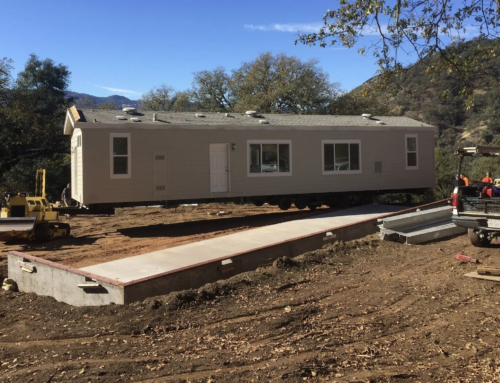
Once the home reaches the property, it may be staged temporarily before final placement.
Site Readiness Matters
Manufactured home installation in Sonoma County and similar regions depends heavily on site preparation. Foundations, utility access, grading, and drainage must already meet requirements.
If the site is not ready, the home may remain sealed longer than planned. During this period, moisture management again becomes important, particularly in energy-efficient modular homes designed for ADUs, rental units, or Sonoma home care cottages.
Step Five: Installation and Set-Up
After placement, installation crews begin securing the home to its foundation.
What Happens During Installation
- Sections are aligned and joined
- Anchoring systems are applied
- Utility connections are completed
- Exterior finishes are sealed
This phase transforms a transported structure into a permanent residence.
Indoor Environment After Placement
Once sealed, efficient homes benefit from planned ventilation and dehumidification. Products like tankless, wall-mounted units covering up to 1,500 square feet, or horizontal systems that fit above doors or in crawlspaces, help maintain balanced humidity without taking up valuable space. These solutions are often well suited for modular homes, prefab housing, student or senior living, hospitality uses, and multifamily settings.
Common Questions Property Owners Ask

Manufactured home permits dictate travel times, approved roads, escort vehicle requirements, and speed limits
- How long does manufactured home transport take?
Transport itself may take a day or several days, depending on distance and conditions. Planning and permits often take longer than the drive. - Will the weather delay the move?
High winds, heavy rain, or extreme heat can pause transport for safety reasons. - Is transport different for ADUs or rental units?
Homes intended for Sonoma ADUs for rental incomeor similar uses often face added zoning and placement considerations, but the transport fundamentals remain the same.
How Preparation Reduces Stress
Understanding each stage of manufactured home transport helps property owners feel prepared rather than reactive. From permits to placement, every step connects. When moisture control, route planning, and site readiness are addressed early, the process becomes far more predictable.
Ready to See Your Home Arrive With Confidence?
What if your manufactured home delivery felt clear, organized, and fully planned from day one? That peace of mind comes from knowing what happens before the wheels roll and after the home arrives. At Sonoma Manufactured Homes, we guide property owners through the full process with a focus on efficiency, comfort, and long-term performance. From understanding permits to planning for healthy indoor conditions in modular and ADU homes, we help reduce surprises at every stage.
If you’re preparing for manufactured home transport or installation, call us at 415-233-0423 to discuss your plans and learn how we can support a smooth, well-prepared delivery.