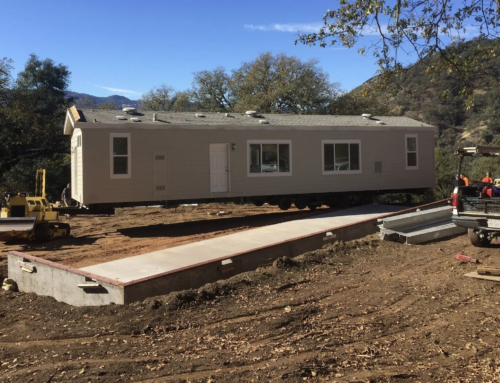
Most homeowners in Sonoma County often focus on the design, the floor plan, and the final installation, but they don’t realize that the process of transporting manufactured homes is where the real complexity lives. Moving a fully built structure across public roads, through neighborhoods, and onto a prepared site requires far more coordination than most people expect. Permits, route assessments, safety protocols, and timing all have to align before the home ever leaves the factory. Understanding what that process actually involves and what can go wrong without proper planning is what separates a smooth delivery from a costly, drawn-out ordeal.
So what does moving a manufactured home from the factory floor to its final destination actually look like in practice?
The Hidden Complexity of Manufactured Home Transport
Manufactured home transport is not a simple logistics operation. A standard manufactured home can span anywhere from 14 to 18 feet in width and stretch well over 60 feet in length, which immediately classifies it as an oversized load under state transportation laws. That classification triggers a chain of requirements that every homeowner needs to understand before signing off on a delivery timeline. Because these homes are built tight for energy efficiency, moisture management is another factor worth addressing early. Tightly constructed units can trap humidity without proper ventilation, leading to condensation, mold growth, and added strain on HVAC systems once the home is occupied.
Oversized loads require escort vehicles and pre-approved routes that avoid low bridges, narrow roads, and overhead utility lines. Travel windows are often limited to daylight hours. A route that looks straightforward on a map can become a logistical problem the moment a bridge weight limit or a tight residential turn enters the picture. Any oversight at this stage doesn’t just cause delays; it can actually result in structural damage to the home, fines, or a transport that has to be rerouted entirely at additional cost. In Sonoma County, where winding roads and varied terrain are common, manufactured home installation projects require route planning that accounts for local road conditions well in advance of the delivery date.
Understanding the Permit Requirements Behind Every Move
Before transporting manufactured homes down a public road, the right permits have to be in place. These are not optional formalities; they are legal requirements that govern how, when, and where the home can be transported.
Transport permits are typically issued at the state level and outline the approved route, travel hours, load dimensions, and escort requirements. Separate permits may also be required at the county level, depending on the roads the transport will cross. In California, oversized load transport is regulated by Caltrans, and non-compliance carries serious consequences, including fines, impoundment, and delays that push back the entire installation timeline.
ADU installations also require building permits, zoning approvals, and utility hookup authorizations before the home can be legally occupied. Working with an experienced team in navigating manufactured home permits across both the transport and installation phases is one of the most important decisions a property owner can make. It’s the difference between a process that moves forward on schedule and one that stalls at every bureaucratic checkpoint.

Manufactured homes classified as oversized loads come with escort vehicles, pre-approved routes, and strict travel windows that add layers of complexity to every move
Route Planning Goes Deeper Than Most Expect
Route planning for manufactured home transport is a specialized process that goes well beyond plugging an address into a navigation app. Transport crews assess every mile of the planned route for potential obstacles such as bridge clearances, overhead power lines, road width restrictions, sharp turns, and weight-bearing limits. All these factors feed into the final approved path. For small home construction in Sonoma County, this assessment stage is especially important given the area’s varied terrain and winding residential roads.
In many cases, utility companies have to be contacted in advance to temporarily raise or disconnect power lines along the route. Local municipalities may need to be notified, and in some cases, police escorts are required for particularly large or complex loads. For manufactured home installation projects, this level of coordination is standard practice, and any gap in that process creates risk that can derail the entire timeline and push back occupancy dates significantly.

Understanding permit requirements ensures each stage of home placement and site preparation meets local regulations and avoids delays
Safety Procedures and What to Expect on Delivery Day
For most property owners, transporting manufactured homes to the final site feels like the finish line, but it’s really the beginning of the final phase. Before the home ever leaves the factory, a set of safety procedures has to be followed to protect the structure, the transport crew, and everyone sharing the road during the move.
Safety during transport starts with the structural preparation of the home itself. Doors, windows, and any loose interior components are secured before the unit is loaded onto the transport vehicle. The home is then strapped and braced to prevent shifting during transit, a step that becomes especially critical on longer routes or roads with significant elevation changes. Escort vehicles travel ahead of and behind the load, alerting other drivers and flagging potential hazards along the approved route. Owners wanting to install small homes quickly notice that narrow roads and unpredictable traffic are logistical obstacles that have to be accounted for in the transport plan long before delivery day arrives.
What property owners should expect during the transport process itself is a carefully managed operation with little room for improvisation. Delivery windows are set in advance, travel is typically restricted to daylight hours, and the crew follows the pre-approved route without deviation. Once the home arrives on site, whether it’s a prefab ADU or a full manufactured home, the installation team takes over, positioning the structure onto its prepared foundation, securing all connections, and ensuring that the unit is code-compliant and ready for occupancy. This finishing stage is also the right moment to address humidity control with wall-mounted dehumidifiers like the IW25, which covers up to 1,500 sq. ft. and drains via gravity. These are installed cleanly into modular layouts without consuming floor space, while horizontal units like the HWD45 can be fitted above doors, cabinets, or in crawlspaces where floor and wall space is limited.

Following proper safety procedures and knowing what to expect on delivery day helps ensure a smooth and secure installation process
Let Sonoma Manufactured Homes Handle Every Step
At Sonoma Manufactured Homes, our team manages the entire process of transporting manufactured homes, from permit coordination and route planning to on-site installation and finishing work. We take the complexity out of every move, ensuring the home arrives safely, on schedule, and ready for immediate occupancy. Contact us today to discuss your project, understand what the transport process involves, and take the first step toward a seamless, fully managed manufactured home installation. You can also reach us directly at 415-233-0423.